
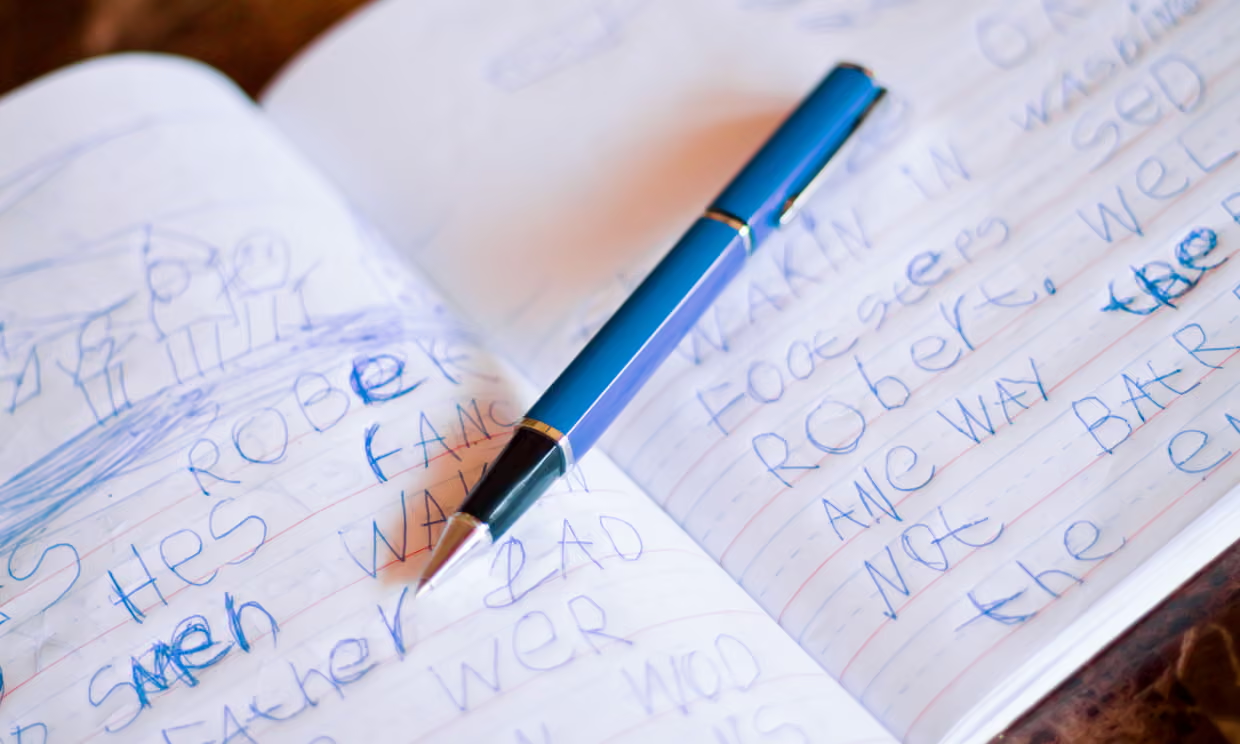
How Are Schools Inspiring Students to Enjoy Writing? A Look at Creative Classroom Approaches
Educators are increasingly exploring creative ways to encourage children to enjoy writing, especially at a time when concerns are growing about reduced handwriting skills. Reports suggest that some children are finding it more difficult to hold pencils and form letters due to increased exposure to touchscreens and digital devices.
Despite this trend, handwriting remains a crucial part of early development, supporting fine motor skills, memory, language learning, and cognitive growth. As a result, teachers are actively rethinking how writing is introduced and practiced in the classroom.
Why Handwriting Still Matters in a Digital World
Although technology plays a major role in modern education, handwriting continues to offer unique developmental benefits that cannot be fully replaced by typing or tapping on screens.
Learning to write by hand helps children:
- Develop fine motor control and coordination
- Improve memory retention and comprehension
- Strengthen spelling and language skills
- Build patience and focus
- Connect symbols (letters) with meaning through physical movement
For many educators, handwriting is not just a technical skill, but a foundation for broader learning.
The Challenge: Reduced Pencil Skills in Young Learners
Teachers and researchers have noted a growing concern that some children are entering school with weaker pencil control than in previous generations. This is often linked to increased use of tablets, smartphones, and touch-based learning tools at home.
These devices, while useful for learning and entertainment, do not develop the same hand strength and coordination required for writing with a pencil or pen.
As a result, educators are placing renewed emphasis on early writing practice and hands-on literacy activities.
Creative Ways Teachers Are Encouraging Writing
Across classrooms, teachers are experimenting with imaginative and engaging techniques to make writing more enjoyable for students. The goal is to move beyond repetition and worksheets and instead create meaningful, motivating experiences.
Storytelling-Based Writing
One common approach is encouraging children to write their own stories based on:
- Personal experiences
- Imagination and fantasy themes
- Classroom discussions or shared reading
By giving students creative freedom, teachers help them see writing as a form of expression rather than a task.
Visual and Thematic Learning Displays
Classrooms are often decorated with colorful writing displays designed to inspire students. These may include:
- Alphabet walls and letter charts
- Word trees or vocabulary maps
- Student-created posters and stories
- Interactive writing corners
Such visual tools help children associate writing with creativity and achievement.
Hands-On Letter Formation Activities
To support early learners, teachers often use physical and sensory-based methods, such as:
- Tracing letters in sand or textured surfaces
- Using clay or playdough to form shapes
- Air-writing large letters with arm movements
- Multi-sensory phonics games
These techniques strengthen muscle memory and make learning more interactive.
Collaborative Writing Projects
Group activities are also widely used to build confidence. Students may work together to:
- Create class books
- Write shared stories or poems
- Develop simple scripts for performances
- Contribute to classroom newsletters
This collaborative approach helps reduce pressure and encourages participation.
Making Writing Fun Through Play and Creativity
Teachers increasingly recognize that children learn best when they are engaged emotionally and creatively. As a result, writing activities are often combined with play-based learning.
Examples include:
- Writing messages in “post offices” set up in classrooms
- Creating fictional menus, letters, or advertisements
- Role-playing storytelling activities
- Using drawing as a bridge to written expression
These methods help children associate writing with enjoyment rather than difficulty.
The Role of Displays and Classroom Environment
The physical classroom environment plays a major role in motivating students. Teachers often design spaces that celebrate writing progress and creativity.
Displays might include:
- “Wall of stories” featuring student work
- Progress charts showing handwriting improvement
- Vocabulary corners with new words and meanings
- Illustrated sentence boards created by students
When children see their work displayed, it reinforces confidence and encourages further effort.
Encouraging Progress from First Letters to Fluent Writing
Teaching handwriting is a gradual process. Educators typically guide students through stages such as:
- Recognizing letters and sounds
- Learning correct letter formation
- Writing simple words
- Building sentences
- Developing structured paragraphs
- Improving handwriting speed and clarity
Each stage is supported with targeted practice and positive reinforcement.
The Importance of Motivation and Confidence
One of the key challenges in teaching writing is maintaining motivation. Teachers aim to ensure that children do not feel discouraged by mistakes or slow progress.
Instead, emphasis is placed on:
- Effort rather than perfection
- Improvement over time
- Creativity and expression
- Individual progress at different speeds
This helps build confidence and reduces anxiety around writing tasks.
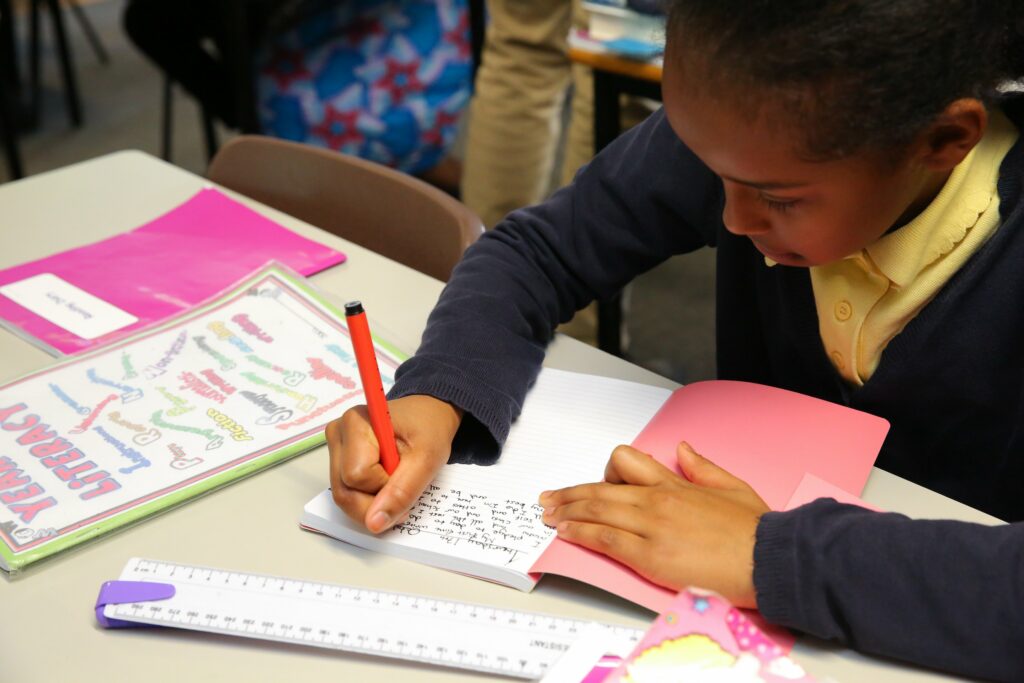
A Call for Sharing Classroom Ideas
Educators are encouraged to share their approaches, ideas, and classroom experiences to help others discover effective strategies for teaching writing.
Teachers are invited to contribute examples such as:
- Photos of classroom displays
- Student writing samples
- Creative teaching methods
- Learning environments that encourage literacy
These shared experiences can help build a wider understanding of what works in promoting writing skills among children.
Safety and Permissions
When sharing classroom materials that include children, it is important to ensure that appropriate permissions from parents or guardians have been obtained before any images or work are made public.
How Contributions Are Shared
Teachers can typically submit their materials through dedicated platforms or apps designed for educational sharing. Submissions may include:
- Photographs
- Videos
- Written descriptions of teaching methods
All contributions are usually reviewed before being published, with selected examples featured to highlight innovative classroom practices.
Conclusion
Despite the growing influence of digital technology, handwriting remains a vital skill in early education. Teachers are responding creatively by designing engaging, playful, and meaningful ways to encourage students to write.
Through storytelling, interactive activities, collaborative projects, and inspiring classroom environments, educators are helping children rediscover writing not as a challenge—but as a powerful form of expression and creativity.