How Singing in Class May Support Early Reading Skills and Brain Development
A growing body of research suggests that singing and music in early childhood education may play a far more important role in reading development than previously assumed. Beyond being a joyful classroom activity, music appears to actively support the brain systems children use to process language, recognize sounds, and build early literacy skills.
Educators and researchers increasingly point to singing as a simple but powerful tool that can strengthen foundational learning at a time when many education systems are struggling with stagnating reading outcomes.
Why Music and Reading Are Closely Connected
Parents and teachers have long used music as a natural part of early learning. Children learn the alphabet through songs, remember routines through rhythm, and often fall asleep to lullabies. These everyday practices now align with scientific findings showing that music supports language development.
Research indicates that singing helps children develop phonological awareness, the ability to recognize and manipulate sounds in spoken language. This skill is essential for learning to read, because reading begins with understanding how words are built from smaller sound units.
When children sing, they are not only memorizing lyrics but also training their brains to detect patterns in rhythm, tone, and sound structure—all of which are directly linked to early literacy.
How Singing Helps the Brain Learn to Read
Neuroscience research suggests that music engages multiple areas of the brain at once, including regions responsible for hearing, memory, attention, and motor coordination.
Singing requires children to process sound sequences, anticipate rhythm, and coordinate speech with timing. This strengthens auditory processing, a core skill needed for decoding spoken and written language.
Experts describe this process as “brain wiring,” where repeated musical experiences help strengthen neural pathways involved in language comprehension and reading fluency.
In simple terms, singing helps the brain become more efficient at recognizing and organizing the sounds that form words.
Emotional and Social Benefits of Music in Early Learning
Beyond reading development, music also supports emotional well-being and social bonding. Listening to or participating in music has been shown to reduce anxiety in young children and strengthen the connection between caregivers and children.
Singing together creates shared attention and emotional synchronization, which can improve communication and trust between adults and children. These early relationships play a critical role in cognitive and emotional development.
Because of this, music is not only an academic tool but also a social and emotional foundation for learning.
Why Music Is Being Pushed Aside in Classrooms
Despite its benefits, music and the arts are often given less priority in early education settings. Many education systems focus heavily on literacy and mathematics, especially in response to concerns about reading performance.
Experts warn that this shift may unintentionally reduce opportunities for children to develop important cognitive and language skills through creative learning.
Some researchers argue that early childhood classrooms are becoming increasingly structured around academic targets, leaving less time for activities like singing, movement, and artistic expression.
Unequal Access to Early Music Education
Access to music education is not equal for all children. In early childhood, exposure to music often depends on family resources, time, and confidence in musical ability.
Many parents want to use music with their children but may feel unsure about how to sing or engage musically. Structured music programs can also be expensive, and free community options vary widely depending on location.
This creates a gap where some children benefit from rich musical environments while others have limited exposure to structured musical learning.
Community Programs Bringing Music Into Early Education
To address these inequalities, several nonprofit and community initiatives are working to bring music directly into early childhood settings.
In Minnesota, the MacPhail Center for Music partners with health clinics to offer free parent-child music classes, making music more accessible to families outside traditional school environments.
In Houston, the Prelude Music Foundation integrates music programs into early childhood centers, focusing especially on underserved communities.
In New York City, the Weill Music Institute runs programs in childcare centers, hospitals, and community facilities, encouraging parents and children to engage in music together.
These initiatives aim to make musical learning a regular part of early development rather than a privilege limited to certain families.
Music-Based Reading Interventions and Early Results
Some programs are specifically designed to connect music with literacy development. One such initiative in Minnesota introduced karaoke-style learning software in elementary schools, encouraging children to sing and engage with language through rhythm and melody.
Over several years, participating schools reported improvements in literacy skills among children involved in the program.
Educators involved in these interventions suggest that singing helps children become more comfortable with spoken language patterns, making it easier to transition into reading and writing tasks.
How Singing Builds Core Literacy Skills
Experts emphasize that singing supports several key abilities required for reading:
It strengthens auditory discrimination, helping children distinguish between similar sounds in words. It improves memory retention through rhythm and repetition. It also enhances pronunciation and language fluency by encouraging vocal practice in a structured but playful way.
Together, these skills form a foundation for reading readiness long before children encounter formal literacy instruction.
The Role of Teachers in Musical Learning
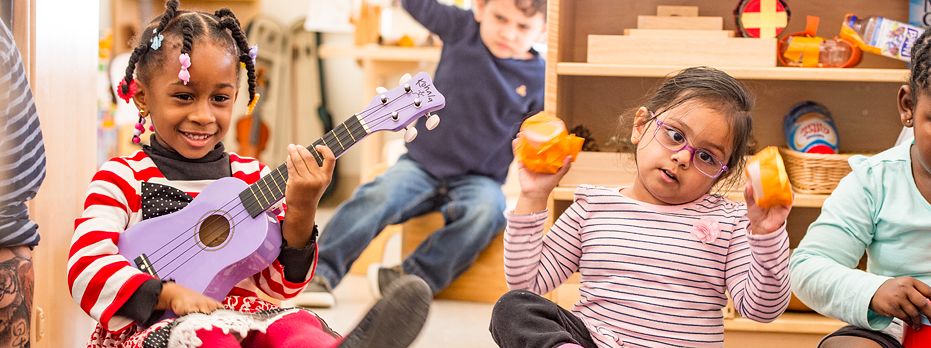
Early childhood educators are increasingly encouraged to incorporate music into daily classroom routines. This does not require advanced musical training or complex instruments.
Simple activities such as clapping rhythms, singing alphabet songs, or repeating patterned chants can all support language learning and cognitive development.
Teachers who integrate music into lessons often find that children are more engaged, attentive, and responsive during learning activities.
Why Auditory Processing Matters for Literacy
Researchers highlight auditory processing as a key factor in language and reading development. This refers to how the brain interprets and organizes sounds.
Singing strengthens this system by exposing children to repeated sound patterns, rhythm structures, and variations in pitch and tone.
Experts argue that strong auditory processing skills make it easier for children to connect spoken language with written words, forming the basis of reading comprehension.
Music as a Foundation for Learning, Not Just an Activity
The growing research suggests that music should not be viewed as an optional or secondary activity in early education. Instead, it functions as a foundational learning tool that supports reading, language development, and cognitive growth.
Rather than competing with literacy instruction, music may enhance it by preparing the brain to process language more effectively.
Final Insight: Singing as a Pathway to Reading
The overall message from current research is clear: singing is more than an artistic activity for young children—it is a cognitive tool that supports how the brain develops reading skills.
By strengthening auditory processing, improving attention, and supporting emotional engagement, music helps build the underlying systems children need for literacy.
As education systems continue to search for ways to improve reading outcomes, researchers suggest that something as simple as daily singing may offer a powerful and accessible starting point.